book review · Always Coming Home
Always Coming Home
2026-03-08 · 3 min read
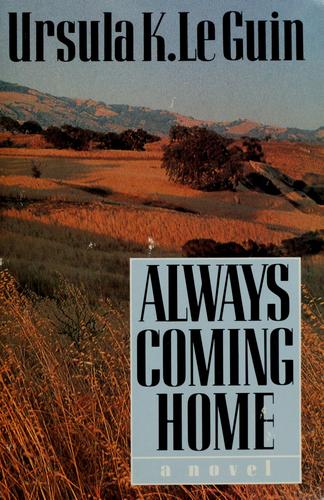
I want to be upfront that this barely reads as a novel, and if you go in expecting the plot momentum of the Earthsea books you will have a bad time. This is closer to a fictional field guide, a future anthropologist’s account of the Kesh, a people living in a post-collapse Northern California generations from now, complete with a glossary of invented words, songs, recipes, and short pieces of embedded fiction scattered through the ethnography like samples pulled from a much longer archive.
That it works at all comes down to how completely Le Guin commits to the anthropological frame rather than the novel frame. Her father was an anthropologist, and it shows in a way that goes past research into method, this doesn’t read like a novelist doing worldbuilding, it reads like an actual field study of a culture that happens not to exist yet. The Kesh’s relationship to technology in particular is the sharpest idea in here, not primitivist, not utopian in the simple sense, a society that kept some machines and discarded others deliberately, and Le Guin has said in interviews she’s not offering this as a Luddite manifesto so much as a genuine alternative, which tracks with how the book treats its own tech choices, matter of fact rather than moralizing.
I won’t pretend this is an easy read, because it isn’t, and I understand completely the readers who describe nodding off through the ethnographic sections or skipping the poetry interludes to get back to a narrative thread. There genuinely are stretches that read like a textbook for a culture that never existed, and the interspersed stories are sparse enough that you can go fifty pages without one. What kept me in it is the total confidence of the invention, this isn’t a sketch of a future society, it’s the whole thing, songs and grammar and agricultural calendar included, built with a density most worldbuilders don’t attempt because it’s genuinely this much work. Not something I’d hand a first-time Le Guin reader. For anyone who already loves her other books and wants to see what she does with total creative freedom and no plot obligations, this is a strange, demanding, genuinely singular thing to sit with.